The short answer
Buy in this order: mic path first, latency second, price third. A wired in-ear monitor adds no wireless codec delay, while every Bluetooth route adds some — and the microphone is where most setups quietly break, because an IEM cable carries audio one way and the adapter in between may not pass voice at all. Getting that order backwards is how people end up with a CAD 100 earphone and no working voice chat.
1. Latency, without the marketing
Wired is the simple answer: an analogue 3.5 mm connection or a USB-C dongle carries audio from the device to the earphone with no wireless codec in the path, so there is no codec latency to argue about. A USB DAC can have its own buffering, but it is not in the same discussion as a Bluetooth transmission.
Bluetooth is where the numbers appear, and the only one we will quote is the manufacturer's. Qualcomm's specification for aptX Low Latency states a latency of approximately 40 ms — the figure the codec was built around for synchronised audio and video. Two caveats matter more than the number itself. Both ends must support that specific codec, or the link falls back to a higher-latency mode. And the codec is not the only source of delay: the game, the operating system and the earphone's own processing each add something. For anything competitive, the honest recommendation is a wired connection — which is why the desktop and console half of gaming audio is still a cable business.
2. The microphone trap, with a Canadian example
Here is a verified failure people hit every week. The FiiO KA11 is a small USB-C dongle we list at CAD 21.99, and it is a reasonable way to get audio out of a phone or laptop. FiiO's own FAQ for the model states plainly that the KA11 does not support wire microphones — the inline mic and remote on a headset cable will not work through it, even though playback does. A USB-C dongle plus a mic'd headset cable is therefore not automatically a working voice-chat setup; you have to read the dongle's own documentation, and for this model the answer is no.
Three rules follow:
- Check the variant, not just the model. The Truthear Gate, for example, is listed on Amazon.ca in a "(White, No Mic)" version — the microphone is a variant choice, not a given.
- A microphone needs a cable that carries it. Earphones with a detachable 0.78 mm 2-pin connection can take an aftermarket cable with an inline mic, which usually costs less than replacing the earphones. Stock cables on the models below are audio-only unless the listing says otherwise.
- A separate microphone is a legitimate answer. If you already own a desk or boom mic, the earphone only has to do the listening half and every cable problem above disappears.
3. What is in stock, at verified prices
Read on Amazon.ca on September 17, 2026, with currency and seller checked at the same time.
| Model | Price (CAD) | Seller shown | Relevant to gaming because |
|---|---|---|---|
| Truthear Gate | 30.99 | LEAUDIO, ships from Amazon | Cheapest verified wired IEM here; wire-only, so no codec latency; check the no-mic variant |
| Moondrop Chu II | 31.99 | LEAUDIO, brand field Moondrop | Detachable 0.78 mm 2-pin cable, so a mic cable can be added later |
| 7Hz x Crinacle Zero:2 | 37.99 | Linsoul storefront | Same detachable-cable family; the listing set includes cable variants |
| Kiwi Ears Cadenza | 45.59 | Linsoul storefront | Same connector family; middle of the band |
| Simgot EW200 | 59.99 | Linsoul storefront | Top of the non-hybrid band, same cable approach |
| Truthear x Crinacle Zero:RED | 93.00 | LEAUDIO, ships from Amazon | Dual dynamic with a bass-adapter switch; upper end of this guide |
If you are adding a dongle, the tier we verified on the same day is the FiiO KA11 at CAD 21.99 (no microphone support — see above), the iFi GO link at CAD 95.82, the Fosi K5 Pro at CAD 99.99 and the TempoTec Sonata BHD Pro at CAD 106.05 with 3.5 mm and 4.4 mm outputs. We have not verified which of those pass microphone audio: the KA11 is the one whose manufacturer answers the question, and the answer is no.
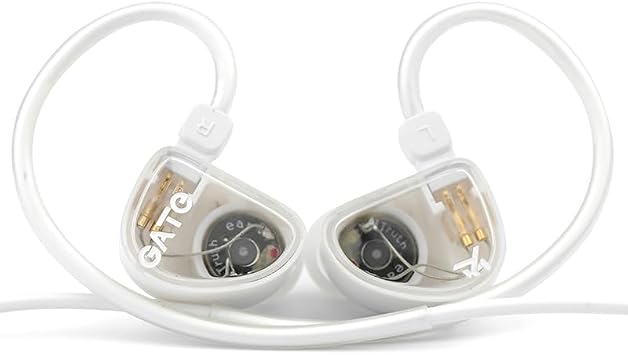
Truthear Gate — CAD 30.99, LEAUDIO
Wire-only, so nothing in the chain can add codec latency. Sold in mic and no-mic variants — pick the one you need.
Read the Gate record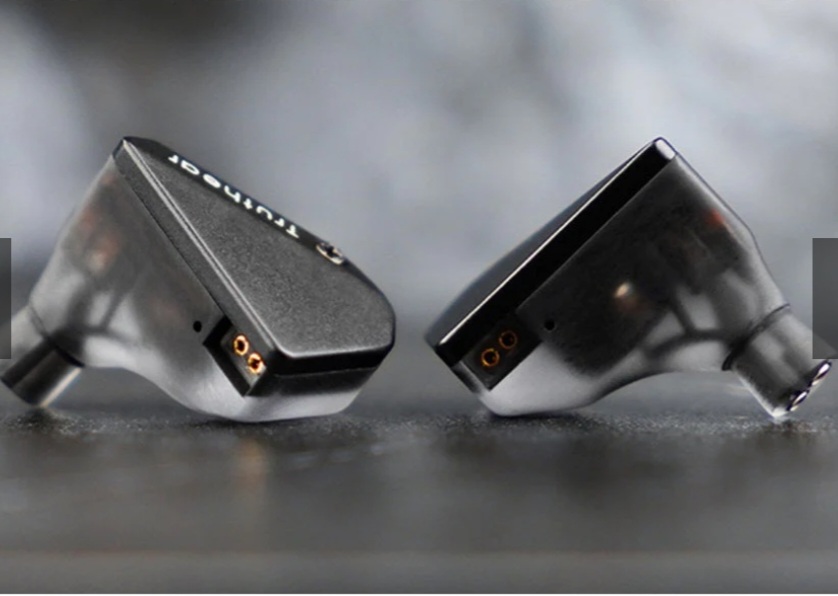
If the budget is higher: Truthear Hexa — CAD 125.99
Hybrid 1DD+3BA, 0.78 mm 2-pin cable, in stock from LEAUDIO. Wired, so the latency section does not apply.
Read the Hexa record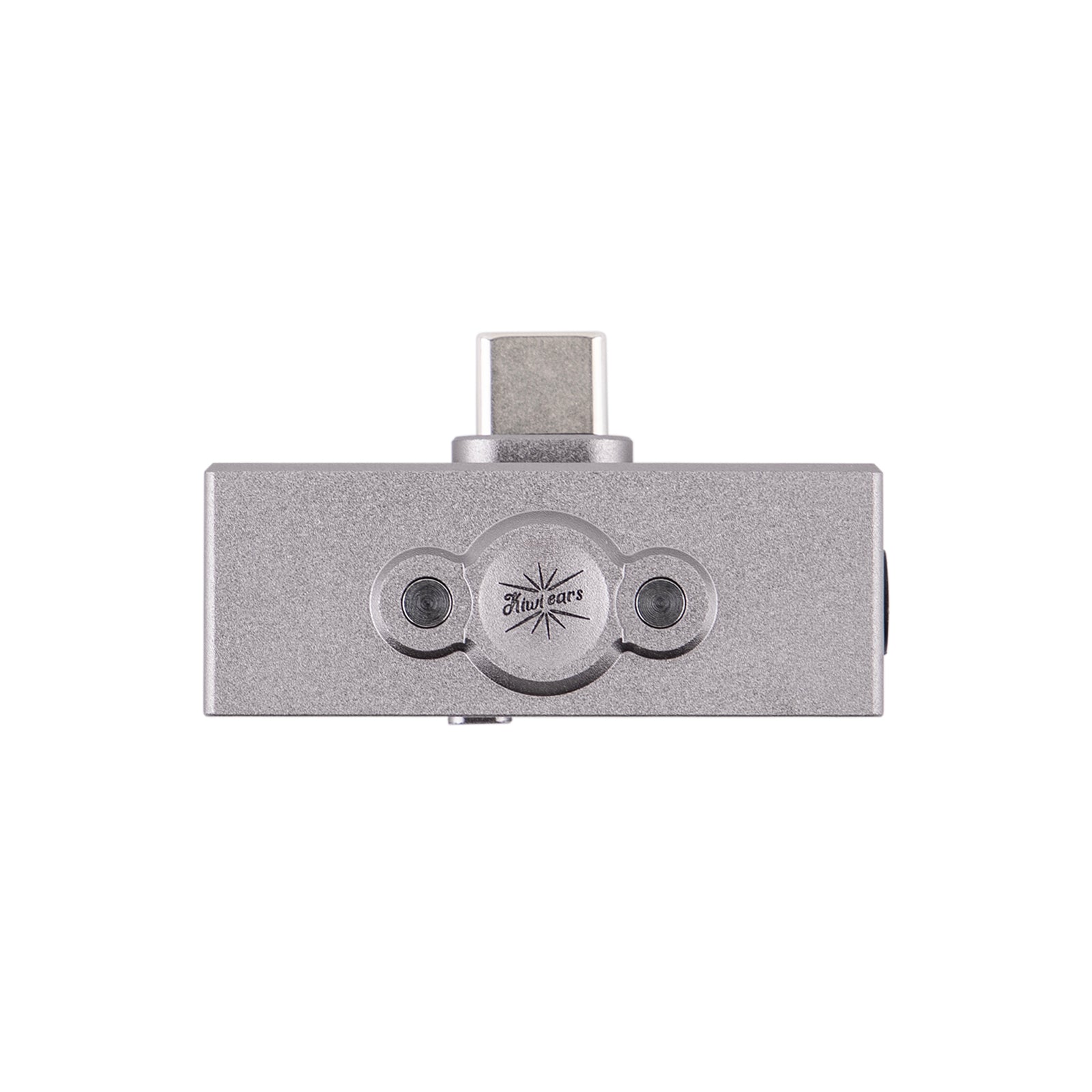
TempoTec Sonata BHD Pro — CAD 106.05, TempoTec Official Store
USB-C dongle with 3.5 mm and 4.4 mm outputs, PCM 384 kHz / DSD256 / MQA. Microphone passthrough is not verified — check with the seller before buying it for voice chat.
Read the Sonata BHD record4. What the word "gaming" on a listing means
Not much, and we will not launder it into a specification. One of the Truthear listings on Amazon.ca carries the words "Gaming Earbud" in its title — that is seller-authored keyword text, not a measurement, and we do not repeat it as a fact about the product. The same applies to latency claims printed on Bluetooth packaging: the number that matters is the codec actually in use between your device and the earphone, which is usually visible in the phone's developer options or the manufacturer's app.
5. Setups that make sense in Canada
- Phone gaming: a wired IEM straight into the phone if it still has a jack, otherwise a USB-C dongle. If you need voice chat, confirm the dongle passes mic audio before buying — most product pages do not say.
- PC: the motherboard or case jack with a wired IEM is the zero-latency, zero-cost option. A desktop DAC is a separate purchase; the dongle guide covers which outputs you actually need.
- Console: the controller's 3.5 mm jack is the practical route. Anything Bluetooth goes back into the latency question above.
6. What we could not verify
- Which of the dongles listed here pass microphone audio, apart from the KA11 where the manufacturer answers it (no).
- Measured latency for any specific phone, codec or earphone combination, and whether a given device supports a low-latency codec at all.
- Whether mic-cable variants of each model are in stock on Amazon.ca today; we verified the models and prices, not every accessory variant.
- The KA11's price on a second read: the listing's price block did not render on our later checks the same day, so CAD 21.99 is the last figure we could read on September 17, 2026.
- Anything about how any of these sound, including in games. No measurements, no listening notes, no preference rankings.
Sources
Related guides: best IEMs under CAD 100 in Canada for the price bands either side of this one, under CAD 30 (Hola vs Gate) for the cheapest verified tier, and where to buy IEMs in Canada for returns, duties and the used market.
- Qualcomm's aptX Low Latency product page — the approximately 40 ms latency specification and its gaming framing. Read September 17, 2026.
- JadeAudio / FiiO KA11 FAQ — "KA11 does not support wire microphones", the microphone caveat used above. Read September 17, 2026.
- Amazon.ca listings and search results — every CAD figure, seller, brand field, stock status and the variant wording ("No Mic", "Gaming Earbud"). Read September 17, 2026.
- linsoul.com product data — which models exist in the detachable-cable family cited here. Read September 17, 2026.
- Google autocomplete with gl=ca and hl=en, queried September 17, 2026: the exact phrase "best iem for gaming canada" returned no suggestions, while the category modifiers ("with mic", "and music", "fps") did.
Prices and stock are dated snapshots. The only latency figure on this page is the codec manufacturer's own specification for one codec, attributed as such; we have measured nothing ourselves.