The short answer
There are four routes, and they differ less on price than on who owns the problem when something goes wrong:
| Route | Best for | The catch |
|---|---|---|
| Amazon.ca | Speed, returns, CAD pricing | Seller quality varies per listing; the same model can be sold by three sellers at three prices |
| Direct from the brand (Linsoul, HiFiGo) | Models not stocked here | You handle the border, and returns mean shipping back across it |
| Canadian retailers and chains | Trying before buying, pro and stage gear | Higher price points; stock is thin, and a web catalogue does not prove shelf stock |
| Used marketplace | Older models, better gear for the money | No warranty path, no returns, and condition is the seller's word |
1. Amazon.ca
This is the default for our price checks because it is where a Canadian buyer can see a CAD price, a seller and a stock status in one place — and where returns are the least ambiguous. What the platform's own return policy says, read September 17, 2026: most items can be returned within 30 days of delivery in original or unused condition; refunds to a credit card typically take 3–5 business days once processed. Third-party sellers who fulfil their own inventory must offer one of a return address within Canada, a prepaid return label, or a full refund without requiring the item back. If you miss the return-by date, the policy document describes a late fee starting at 20% of the item price.
Two habits make this route safe: read the brand field and read the seller line. Those two fields catch both the counterfeit and the overpriced reseller, and they are why we check both before recommending a listing. The work is already done for the current shortlist in best budget IEMs in Canada, and the store-by-store arithmetic is in Amazon.ca vs Linsoul.
2. Direct from the brand
Two stores matter for the models this library covers, and their frameworks differ in a way that changes the maths.
Linsoul ships by two methods: a Standard service (4PX, Yanwen, Yun Express) and Express (DHL, FedEx, SF Express). Their shipping page states that Standard is tax-inclusive for some countries but that customers bear any customs, import or processing fees applied to the parcel, and that Linsoul is not responsible for administration or handling fees charged by the local courier. In-stock orders ship within three working days, PO boxes are not accepted, and returns and replacements fall under their 30-day after-sales terms. Their lost-parcel rules are worth reading before ordering: below USD 50 you may choose a reshipment or a full refund, while above USD 50 the stated remedy is a 50% refund. Refusing to pay duty still leaves you the two-way shipping cost.
HiFiGo is the opposite proposition. Its shipping page lists a "Premium" international method — 6–10 days with all tax and duty prepaid by HiFiGo, with Canada named among the eligible countries — so nothing is collected on arrival. Its Express option says taxes may be payable instead. On returns, the warranty page describes a 7-day DOA guarantee, a 30-day return window for items still in brand-new condition (refund minus round-trip shipping and duties), a 30% resealing fee for opened non-defective returns, hygiene exclusions for earplugs and cables, and a warranty of one year for labour and one year for parts.
The currency trap applies here, and it is the most expensive mistake on this page. Linsoul shows a Canadian visitor CAD figures — its own converted display — while the order is charged in USD. Doing the landed-cost arithmetic from the CAD display and then converting again overstates the cost by roughly 42%. Take the USD list price, convert it once at a real rate, then add tax and handling. The mechanics are in importing IEMs and DACs.
3. Canadian retailers
If the point is to see the product, Canada does have options, and they lean professional: Music City Canada in London, Ontario runs an in-ear monitor collection priced in CAD; Bay Bloor Radio in Toronto lists professional IEM brands such as 64 Audio; Best Buy Canada and specialist shops such as InEars Canada and Plunge Audio also list in-ear models. One pro-audio shop we checked showed a three-digit CAD price for a mainstream-brand wireless in-ear, which sets the expectation for this route.
The honest caveat: we verified that these retailers list in-ear monitors and their published return windows, not that any specific model is on a shelf today. For a purchase at this level, call first. What you are paying for is the ability to try the fit and walk out with the item — which is worth more on a stage or studio purchase than a few dollars of margin.
4. The used market
Canuck Audio Mart is the Canadian marketplace for this hobby: postings are free for hobbyists, prices are in Canadian dollars, sellers must be in Canada, and there is a feedback system. Its rules matter if the seller is a business — dealers may only post items that are on clearance, special, sale or trade-in, and the site takes a 2% commission (minimum CAD 3) on "Buy It Now" payments, with auctions carrying a listing fee from CAD 2 plus a 2% closing fee.
Kijiji and Facebook Marketplace work too, with no fees and no protection. In both places, assume there is no warranty path: the receipt is in someone else's name, the retailer will not serve you, and a manufacturer warranty is tied to the original purchase. Buy used for the model, not for a discount on something you could buy new.
5. How to compare all four on one number
Different routes quote different currencies and different tax treatments, so compare landed cost — item, exchange, tax, duty, handling — and then add the value of the safety net you are giving up:
- Amazon.ca price = the price. Domestic, CAD, returnable. Current checked prices: the budget shortlist and under CAD 100.
- Direct-order price = USD list × exchange + GST/HST + handling, unless the retailer prepays duties (HiFiGo's Premium method), in which case use their all-in figure.
- Local retail = ticket price + tax, no border step, higher absolute cost.
- Used = asking price, with a warranty worth treating as zero.
Timing matters too: the 2026 sale calendar covers the published Amazon.ca windows and the price history behind them.
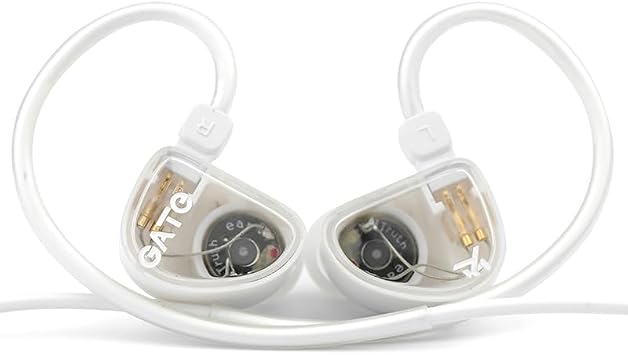
Entry tier: Truthear Gate — CAD 30.99
In stock on Amazon.ca from LEAUDIO, ships from Amazon, brand field TRUTHEAR. Domestic, CAD, 30-day return window.
Read the Gate record
Mid tier: Moondrop Chu II — CAD 31.99
Sold by LEAUDIO on Amazon.ca with a 0.78 mm 2-pin detachable cable. The domestic route at its cheapest with a replaceable cable.
Read the Chu II record
Also domestic: 7Hz x Crinacle Zero:2 — CAD 37.99
Stocked on Amazon.ca through the Linsoul storefront, so it arrives with no border event and no currency conversion.
Read the Zero:2 record6. The traps, in one list
- A CAD display is not a USD charge. Convert once, from the amount the card is charged.
- A brand name in the title is not the brand field. Check the listing's brand and the seller line.
- "In stock" on a marketplace listing is not the same as shipped by the store. Fulfilment decides who handles the return.
- A shipping method that prepays duties is worth real money. Compare it against a cheaper-looking price that leaves a customs bill to arrive later.
- A marketplace ad from a business must follow the site's rules. If a "private" seller is clearly a dealer, the listing may be outside the terms.
- The receipt decides the warranty. Buying used usually means buying without one.
7. The rest of this library
This page is the entry point; each of these answers one part of the buying decision:
- Amazon.ca vs Linsoul: which is cheaper in Canada? — the store-by-store comparison.
- Importing IEMs and DACs: duty, GST/HST and the $9.95 fee — the border arithmetic.
- Best budget IEMs in Canada: 9 picks with live prices — the current shortlist.
- Best IEMs under CAD 100 in Canada — the CAD 30–100 band, with the currency traps.
- Best IEM under CAD 30 in Canada: Hola vs Gate — the entry tier, and the model that is no longer buyable here.
- Best IEM for gaming in Canada — latency and the microphone trap.
- When are IEMs and DACs cheapest in Canada? — the sale calendar.
- Budget DAC dongles in Canada — if the source matters as much as the earphone.
- Qudelix-5K in Canada — what it takes to buy a model that is not stocked here.
8. What we could not verify
- Current shelf stock at any Canadian retailer named here; we verified catalogues and published policies, not inventory today.
- Whether Linsoul's Standard shipping currently treats Canadian parcels as tax-inclusive — their page says "some countries" and does not name Canada.
- Actual delivery times or courier charges for any specific Canadian address.
- Whether used prices are currently above or below new for any given model; used prices are individual transactions and we did not read a sample.
- Anything about how any of these products sound. This page compares terms, not preferences.
Sources
- Amazon.ca Return Policy, official help page (nodeId GKM69DUUYKQWKWX7) — the 30-day window, refund timelines, third-party seller return obligations and the late-fee structure. Read September 17, 2026.
- Linsoul Shipping FAQ page — shipping methods and carriers, customs responsibility, dispatch time, PO box restriction, lost-parcel remedies. Read September 17, 2026.
- Linsoul 30-day returns and replacements notice — the after-sales term quoted above. Read September 17, 2026.
- HiFiGo Shipping Policy and Warranty & Refund Policy pages — the Premium duty-prepaid method with Canada listed, the DOA and 30-day return terms, the 30% resealing fee, and warranty length. Read September 17, 2026.
- Canuck Audio Mart FAQ, guidelines and terms pages — free hobbyist postings, CAD pricing, dealer listing restrictions, Buy It Now and auction fees. Read September 17, 2026.
- Canadian retailer catalogue pages (Music City Canada, Bay Bloor Radio, Best Buy Canada, InEars Canada, Plunge Audio) — which Canadian routes list in-ear monitors, and their published return windows. Read September 17, 2026.
- Google autocomplete with gl=ca and hl=en, queried September 17, 2026 — the keyword family and the in-person intent ("near me", "in store") behind the local-retail section.
Retailer terms and prices are dated snapshots. Where a policy is quoted, the date it was read is stated; where a figure could not be read, this page says so instead of filling the gap.