How We Evaluated & Editorial Methodology
How we evaluated: Products were compared using manufacturer specifications, published measurements, retailer listings, long-term community feedback, and Canadian buying factors such as availability, shipping, warranty, and import risk.
Editorial methodology: This is a research-based buying guide. SoundGain does not claim hands-on testing of every product listed, and readers should confirm final specifications, pricing, stock, and retailer terms before purchasing.
Prices last checked: June 09, 2026 at 9:18 PM MDT. Prices, coupons, availability, and terms may change at any time. Confirm with the retailer before purchasing.
Book-Shelf Hi-Fi on a Budget
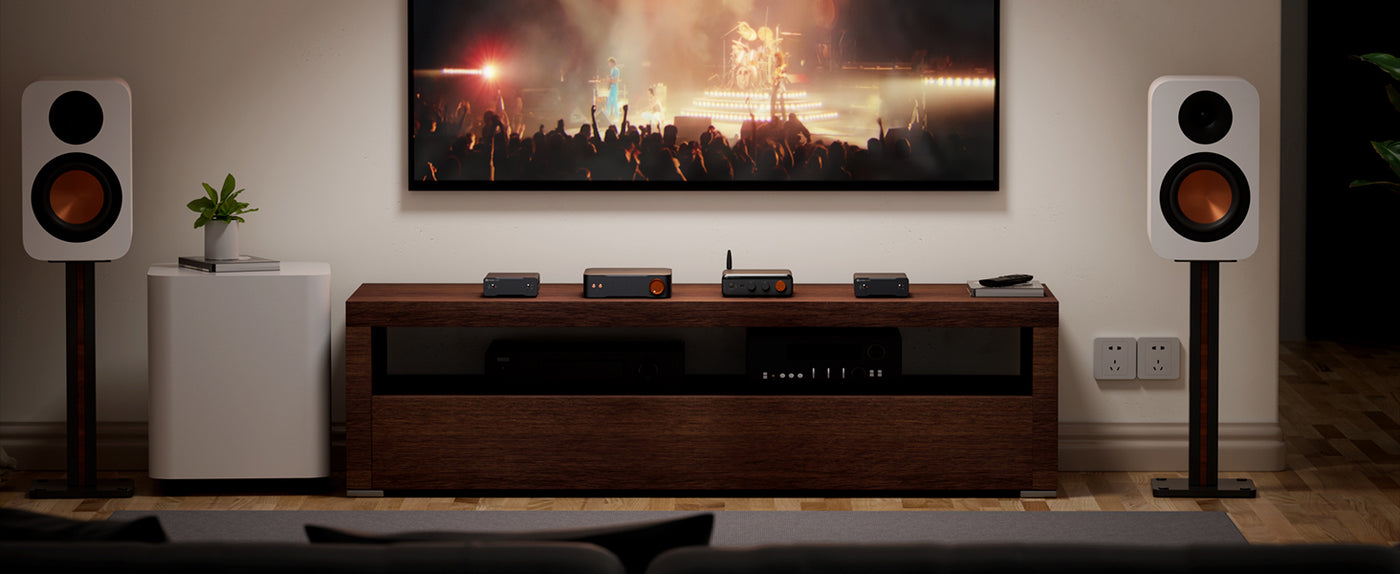
Building a home audio system doesn't have to cost thousands. Today, class-D amplifiers like the Fosi Audio V3 provide clean, audiophile power in tiny enclosures. We design a step-by-step $500 CAD audio setup linking speaker amps, external DACs, and budget speakers.
The $500 CAD System Architecture
- The Source: PC or TV via Optical/USB.
- The DAC: SMSL SU-1 (~$109) - converts digital audio to clean analog.
- The Amplifier: Fosi Audio V3 (~$149) - drives passive bookshelf speakers with TPA3255 power.
- The Speakers: Pair of passive bookshelf speakers (e.g. Sony SSCS5 or Pioneer SP-BS22-LR) (~$200-240).
Deeper Buying Notes
Where the budget should go
For a $500 CAD home system, the biggest improvement usually comes from speakers and placement before electronics. A clean Class D amplifier is useful, but even a strong amplifier cannot fix speakers placed too close to a wall, hidden inside a shelf, or aimed away from the listening position. Budget for stands, basic speaker wire, and enough room to place the speakers symmetrically.
Room size and listening distance
Small rooms do not need huge power. Nearfield listening at a desk or in a condo living room can work well with compact bookshelf speakers and a modest amplifier. Larger rooms need more speaker sensitivity, more amplifier headroom, or a subwoofer plan. Buyers should also consider whether they need Bluetooth, optical input, USB input, or only a simple analog amplifier.
Practical recommendation
Start with the speaker choice, then select the amplifier around the inputs and power you actually need. Keep the setup simple for the first version: speakers, amp, source, and clean placement. Upgrade later only after you know what is missing, such as bass extension, remote control, or better desktop connectivity.
Quick Verdict
The smartest $500 CAD system is usually not the flashiest one. A simple amp, sensible speakers, and careful placement will beat a complicated setup with poor speaker positioning. Spend first on the parts that affect the room: speakers, stands, and layout. Add nicer electronics only when the system basics are already working.
Avoid overspending on power if you listen nearfield or in a condo. Extra wattage looks good on a spec sheet, but cleaner placement and the right speaker sensitivity usually matter more at normal volume.