Choose the outputs, then the box.
Note: the FiiO NEW K3 appears in the table below for the output comparison only — it is not in our catalogue, so we do not publish a Canadian price for it. The models we do list and price are linked below.
For headphones, you need a headphone output with amplification. For powered speakers or a separate amplifier, you may only need a line-output DAC. The SMSL SU-1 is not a direct substitute for a headphone DAC/amp.
Three different connection paths
| Device | Digital input | Listening connection | Main check |
|---|---|---|---|
| Topping DX1 (original) | USB | Headphone outputs and RCA line output | Its volume knob controls headphones; its line output is fixed. |
| SMSL SU-1 | USB, optical and coaxial | RCA analogue line output | No headphone socket or headphone amp. Optical and coaxial are inputs. |
| FiiO NEW K3 | USB | 3.5mm and 2.5mm headphone outputs; 3.5mm line output | Optical/coaxial connections are digital outputs, not TV inputs. |
See the manufacturer sources below. This table concerns the original DX1 and FiiO NEW K3; do not transfer these specifications to the DX1 II, KA11 or other models.
Match your existing system
- Wired headphones from a computer: a headphone DAC/amp can supply the required output and physical volume control. Check the exact headphone plug.
- Powered speakers: confirm their input and volume control. The original DX1 line output is fixed, so its front knob will not turn those speakers down. Topping states this explicitly in its support notes.
- Passive speakers: a DAC alone does not replace a speaker amplifier. Keep a suitable amplifier between the DAC and the speakers.
- A source with optical output: look for an optical input on the receiving DAC. The SU-1 and NEW K3 serve different roles here.
Two options already in our catalog
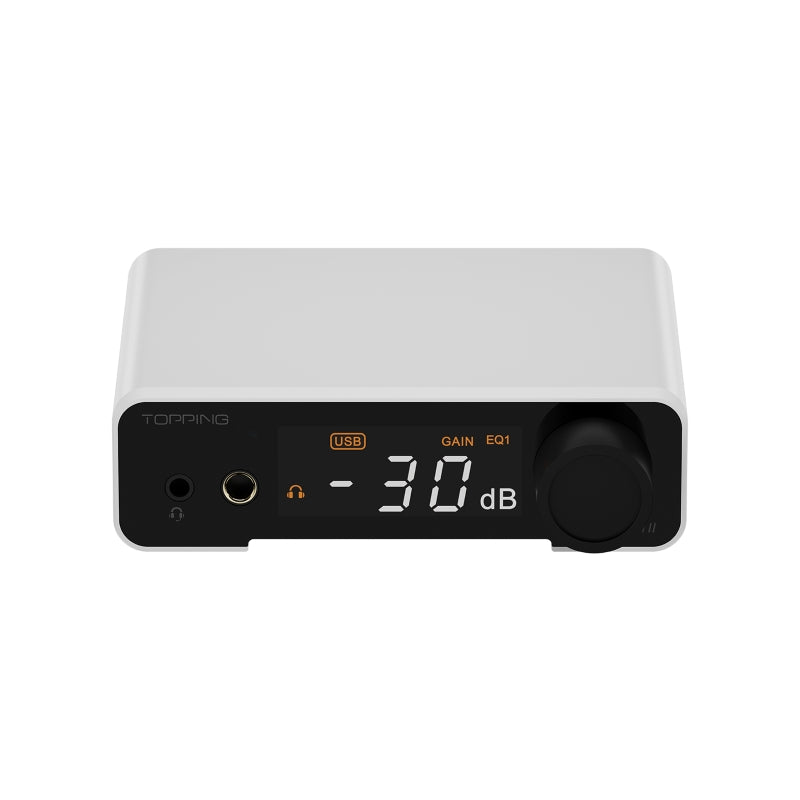
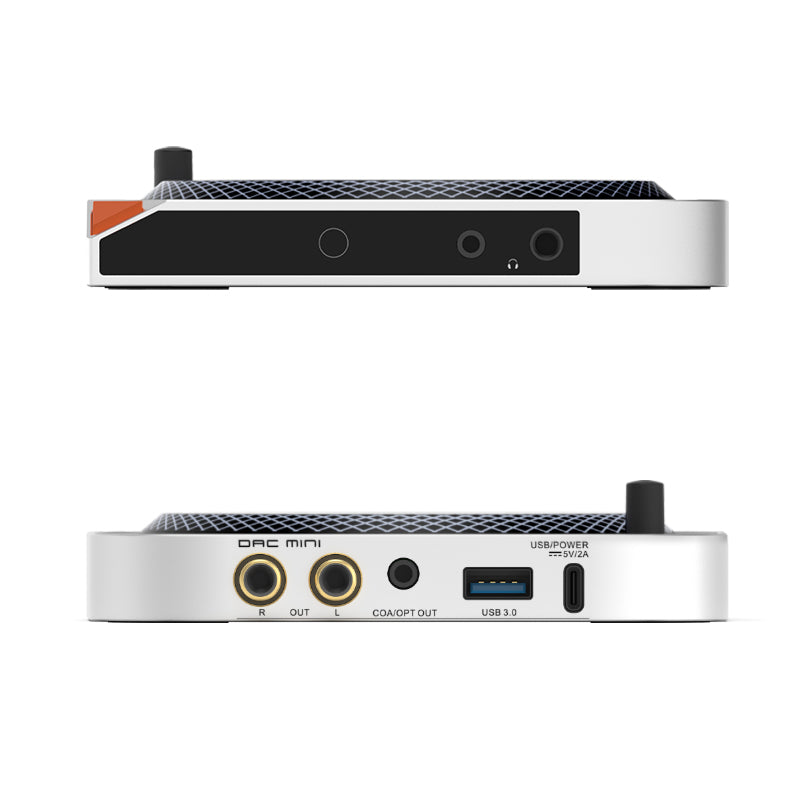
For the NEW K3, consult FiiO’s official specifications below. We have not substituted a KA11 purchase link for it.
Do you need an upgrade at all?
If your present device gives you the connections, volume and clean playback you need, there may be little practical reason to add a box. If there is a problem, first check the selected output, cable and downstream device. Buying a DAC is not a diagnosis for every source of noise.
The original “under $200 CAD” URL is retained for existing links. This revised guide does not promise that every version is available within that budget.
Sources and update notes
Checked September 5, 2026. Manufacturer and retailer descriptions inform the facts; recommendations are our interpretation. Price and stock must be checked again at purchase.
Related buying guides: Desktop DACs under CAD 200 in Canada, Portable headphone amps in Canada.